If the Association for the Study of African American Life and History ever needed proof that its mission was as vital as ever, the stripping of the President’s House was likely the kind of rallying cry members never wanted to hear.
The panels chronicling the lives of enslaved people who served President George Washington at his residence in Philadelphia were dismantled Jan. 22 following an executive order by President Trump to remove exhibits “disparaging” to American history.
“You can’t celebrate U.S. history without talking about who we are and how we came about,” said …
This item is available in full to subscribers.
You can also purchase this individual item for $1.50
We have recently launched a new and improved website. To continue reading, you will need to either log into your subscriber account, or purchase a new subscription.
If you are a digital subscriber with an active subscription, then you already have an account here. Just reset your password if you've not yet logged in to your account on this new site.
If you are a current print subscriber, you can set up a free website account by clicking here.
Otherwise, click here to view your options for subscribing.
Please log in to continue |


If the Association for the Study of African American Life and History ever needed proof that its mission was as vital as ever, the stripping of the President’s House was likely the kind of rallying cry members never wanted to hear.
The panels chronicling the lives of enslaved people who served President George Washington at his residence in Philadelphia were dismantled Jan. 22 following an executive order by President Trump to remove exhibits “disparaging” to American history.
“You can’t celebrate U.S. history without talking about who we are and how we came about,” said Karen Williams, of West Oak Lane, president of the Association’s Philadelphia/Montgomery County branch. “Our ancestors built this country and that needs to be spoken about. Even though for some it’s hard and difficult to swallow and accept – the history is still about facts.”
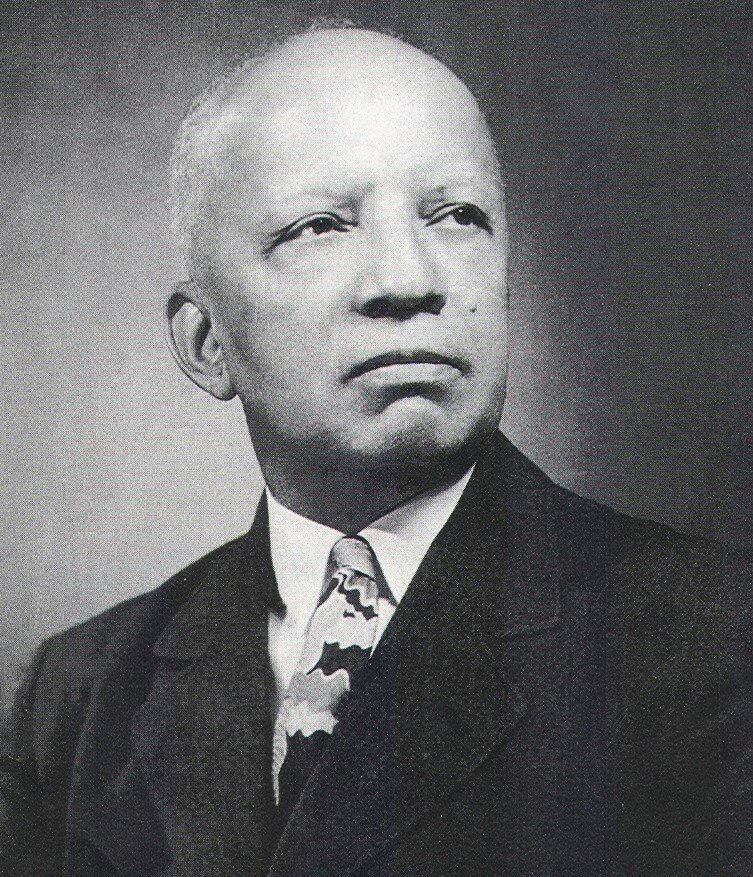
So, in the wake of book bans, DEI rollbacks and the nation’s 250th anniversary, Williams and her fellow members persevere. They aim to carry out the mission of an organization started in 1915 by historian Carter G. Woodson, the founder of the Negro History Week observance that has evolved into Black History Month.
This year marks the 100th anniversary of Negro History Week, and the 50th marking Black History Month. The Association for the Study of African American Life and History (ASALH), which locally also includes the 97-year-old Heritage Branch, has planned a year’s worth of observances honoring the important anniversaries. Highlights include a 2 p.m. discussion Feb. 22, with historian Evelyn Brooks Higginbotham at the Historical Society of Pennsylvania.
The event is one of many throughout the region in observance of Black History Month. In the Northwest, residents can celebrate with art exhibits, concerts, lectures and live theater, while observances outside the neighborhood include film festivals, book fairs, tours and comedy shows.
ASALH also will be participating in events with the School District of Philadelphia and the Free Library. The organization’s Philadelphia/Montgomery Branch was founded in 2002 by the late Shirley T. Parham, Ed.D., and the late Naomi E. Berry, two educators who lived in southeastern Montgomery County. The group’s mission is “to promote, research, preserve, interpret and disseminate information about Black life, history and culture.”
ASALH develops programming frequently at southeastern Montgomery County sites including Arcadia University, offers scholarships and co-sponsors Freedom School, a 10-week course on Black history that visited Cliveden in Germantown as part of its curriculum.
In November, Erica Massenburg, a teacher at the John B. Kelly School in Germantown, and her 10-year-old daughter Neytiri, were students in the Freedom School program.
“I don’t think you can learn too much in general, but particularly about our history,” Massenburg said. “Some people have a mindset that they don’t want to talk because it makes them sad, but we do need to talk about it to pass it down to the next generation. We saw what happened at the President’s House.”
The dismantling of the site’s interpretive panels by federal agents has so far prompted a lawsuit from the City of Philadelphia, protests by groups including Avenging the Ancestors Coalition, which was instrumental in lobbying for the commemoration of the enslaved people at the site, and a letter to the U.S. Department of the Interior objecting to the removal and signed by 44 organizations. Among them are the Historic Germantown partnership of historic sites, and the Chestnut Hill Conservancy.
“For us, it was a pretty easy and important decision to join in the voices [represented in the letter],” said David Gest, Esq., executive director of the Conservancy. “We think it is extremely import to share all aspects of history and tell all stories.”
A Black history calendar:
Artisans forward
Black creativity gets its due every Saturday in February with “From Our Hands to History: Celebrating 100 Years of Black Artistry & History,” a showcase of fashion, art, jewelry and culture at Movement Philly in Mt. Airy. Noon to 6 p.m. 7133 Germantown Ave., Mt. Airy
Books, glorious, books
The 34th Annual African American Children’s Book Fair extends an invitation to a world of imagination for youngsters and their families with visits from authors of some of the most renowned children’s books. Pennsylvania Convention Center, 1101 Arch St., Center City. 1 p.m., Feb. 7.
Ready to exhale
Release anxiety and stress through breathwork and sound healing with two events at First United Methodist Church of Germantown. Facilitators whose mantra is “rest is resistance, breath is remembrance, and community is medicine” lead a workshop at 9:15 a.m., Feb. 8 (Cost $44.52), while a session focusing on Black men offers an afternoon of grounding, brotherhood, and renewal at 3 p.m. , Feb. 14 ($20), 6001 Germantown Ave. eventbrite.com
‘Last seen’
Villanova University professor Judith Giesberg discusses her research on the efforts of formerly enslaved people to find their lost loved ones, which included placing newspaper ads after Emancipation. Ebenezer Maxwell Mansion. 200 W. Tulpehocken St., 3 p.m., Feb. 15. historicgermantownpa.org/Ebenezer-maxwell-mansion.
Heart health
Heart health in the Black community is the focus of this Black History Month event featuring expert speakers and interactive sessions. Free screenings for blood pressure and A1C are included. The Commons, Arcadia University, 450 S. Easton Rd., Glenside. 10 a.m., Feb. 28. eventbrite.com
Reel Black
The Philadelphia Film Society presents Black Cinema Week with screenings of movies including “Fences,” “Harlem Nights,” “Posse,” and “One Night in Miami.” Film Society East, 125 S. 2nd St., Feb. 20-26. filmadelphia.org
And the winner is …
The work of Oscar-winning costume designer Ruth E. Carter is the star of “Afrofuturism in Costume Design” at the African American Museum in Philadelphia. The exhibit includes Carter’s award-winning work for “Black Panther,” as well as costumes for “Sinners,” for which she is nominated for yet another Academy Award. 701 Arch St. aampmuseum.org.
Art x life
The work of artists Syd Carpenter and Jerry Pinkney explore Black life in ongoing exhibits at Woodmere including “Planting in Place, Time, and Memory,” showcasing Carpenter with a 50-year retrospective, and “Minty: A Story of Young Harriet Tubman,” along with “Soul, Sound, and Voice: The Art of Jerry Pinkney,” highlighting the work of the master colorist and illustrator. 9201 Germantown Ave. woodmereartmuseum.org
Theater for a cause
Drop by Grey Towers Castle on the campus of Arcadia University in Glenside for an evening filled with music, food, and community. The event benefits the launch of Origyns Afrika, a series of cultural immersive theater festivals. 3 p.m., March 8. $45. eventbrite.com
For more information about ASALH, visit asalh.org; and asalh.org/philamontco-branch-of-asalh-pa/



