If it’s spring, it’s time for the “Toad Detour” in Upper Roxborough.
The Schuylkill Center for Environmental Education has been organizing the annual program since 2012 to protect the local toad population during its breeding season from March to July.
As a part of a toad’s life cycle, they return to where they were born to breed. But near the center, the area they must navigate is densely populated and surrounded by busy streets. That’s where the center’s volunteers come in.
Lisa Levinson came up with the concept of the toad detour in 2008 when she observed that toads …
This item is available in full to subscribers.
You can also purchase this individual item for $1.50
We have recently launched a new and improved website. To continue reading, you will need to either log into your subscriber account, or purchase a new subscription.
If you are a digital subscriber with an active subscription, then you already have an account here. Just reset your password if you've not yet logged in to your account on this new site.
If you are a current print subscriber, you can set up a free website account by clicking here.
Otherwise, click here to view your options for subscribing.
Please log in to continue |


If it’s spring, it’s time for the “Toad Detour” in Upper Roxborough.
The Schuylkill Center for Environmental Education has been organizing the annual program since 2012 to protect the local toad population during its breeding season from March to July.
As a part of a toad’s life cycle, they return to where they were born to breed. But near the center, the area they must navigate is densely populated and surrounded by busy streets. That’s where the center’s volunteers come in.
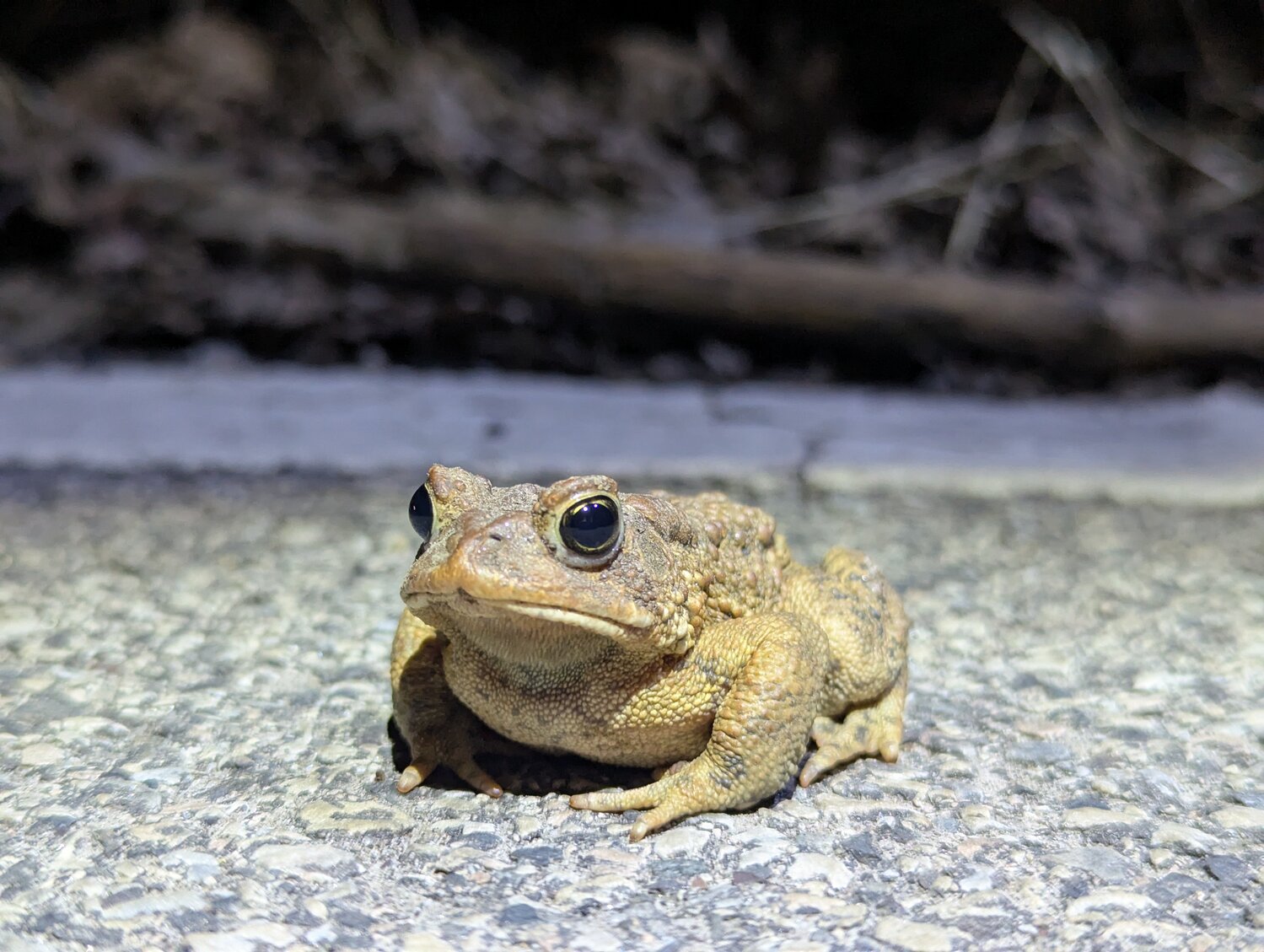
Lisa Levinson came up with the concept of the toad detour in 2008 when she observed that toads were often hit by cars near the Roxborough Reservoir, the toads’ primary breeding ground. Since the first official crossing in 2009, a total of 22,000 total amphibians have been logged and counted by volunteers. In 2012, The Schuylkill Center made the initiative an official part of its programming.
Planning for the detour begins in February with the center’s Winterfest for Wildlife event which includes in-person training sessions organized by volunteer and community outreach coordinator Susan Slawinski, who has a longtime love for reptiles and amphibians. Slawinski has been with the center since July 2024. This year will be her second time overseeing the toad detour.
“It starts with late winter, early spring, when you get the first few warm nights with some rain. It awakens the toads from something called brumation, which is similar to hibernation in mammals. They will come out of the dirt in the ground or wherever they are hiding, and their instinct is to cross the road,” Slawinski said.
Toad season takes off when adult toads return to the reservoir, with toadlets crossing from May 15 to June 20. “It’s to the reservoir in the beginning, and then towards the forest in the end,” she said.
Hopping to and from the reservoir means crossing the area around Port Royal Avenue, Eva Street and Summit Avenue. The center has a permit to close roads until the end of June. Slawinski says this crossing is about .7 miles, posing a major threat to the toads. Volunteers are typically called to help out with crossings from 7 p.m. to 9:30 p.m.
“After the volunteers leave, the frogs and toads are still crossing well into the night,” Slawinski said.
Volunteers aren’t required to have prior experience or a background in biology. They receive instruction on how to manage the toads, including how to touch them because natural oils on human skin can be harmful if absorbed. The volunteers are trained to wash their hands and pat them in soil to create a barrier. They also can place the toads in buckets to quickly transport them.
As coordinator, Slawinski says her main responsibility is to provide the volunteers with a good understanding of how to protect toads as well as contribute to the center’s data about the species that are crossing.
“We’ve always had a steady stream of volunteers,” she said. “The biggest hurdle, I would say, is getting folks that want to take on our shift supervisor position and kind of help manage and oversee other toad detour volunteers.”
Luckily, Chris Hand has been a dedicated volunteer for the toad detour since 2013, not only as a shift leader but as a weather predictor to determine when the toads are most likely to cross. Warm, damp spring nights are most popular.
“I’m a software engineer by trade, so it was just some fun little side project for me. But we’ve tweaked it over the years, and we keep track of how well it’s doing,” Hand said.
The most common species in the area are Eastern American toads but the center also sees green frogs, pickerel frogs and Fowler’s toads.
The Schuylkill Center’s main goal is to inspire connections between people and nature. It offers an array of programs that offer opportunities to better engage with forests and further education about wildlife rehabilitation and conservation. The center was founded in 1965 and includes 365 acres of land.



